
Such stupidity and ignorance! Their eyes are closed, and they cannot see. Their minds are shut, and they cannot think. Isaiah 44:18
On a downtown bus, just as it is pulling into its next stop, a woman stands up, slaps the face of the man next to her, and hurries to the exit.
Each of the passengers who saw what happened react in their own way.
A middle-aged man feels sad for the man who was slapped.
A younger woman is frightened.
A teenage boy is angry.
Another woman feels excited.
How could the same event trigger such an array of varying emotions? The answer is found in self-talk.
The middle-aged man who reacted with sadness, thought to himself, “He’s lost her and he’ll never get her back.”
The fearful woman thought, “She is going to really pay a price for that tonight when he sees her at home.”
The angry teenager says to himself, “She humiliated him; like most women, she must be a real jerk.”
The woman who felt excited, said to herself, “Serves him right. What a strong woman; I wish I was more like that.”
In each case, the event was interpreted, judged and labeled, almost instantaneously. And the individual’s unique self-explanation resulted in a distinctive emotional experience – sadness, fear, anger, or excitement.

Thinking is the talking of the soul with itself. –Plato
Truth is, the emotional consequence of an event like this varies as much as the people observing it.
Which is exactly why, even in a relationship with the person we love the most, we must clarify our perceptions before we jump to a faulty conclusion.
How many times have you made an assumption that led you down an unnecessarily bumpy conversation with our spouse?
It happens to all of us. And often, it can be remedied with a simple question: Do I understand you correctly?
Reflect and Respond
When do you most likely need to be better at clarifying what your spouse says and why?
Go ahead, tell us in the comments.
Related Resource
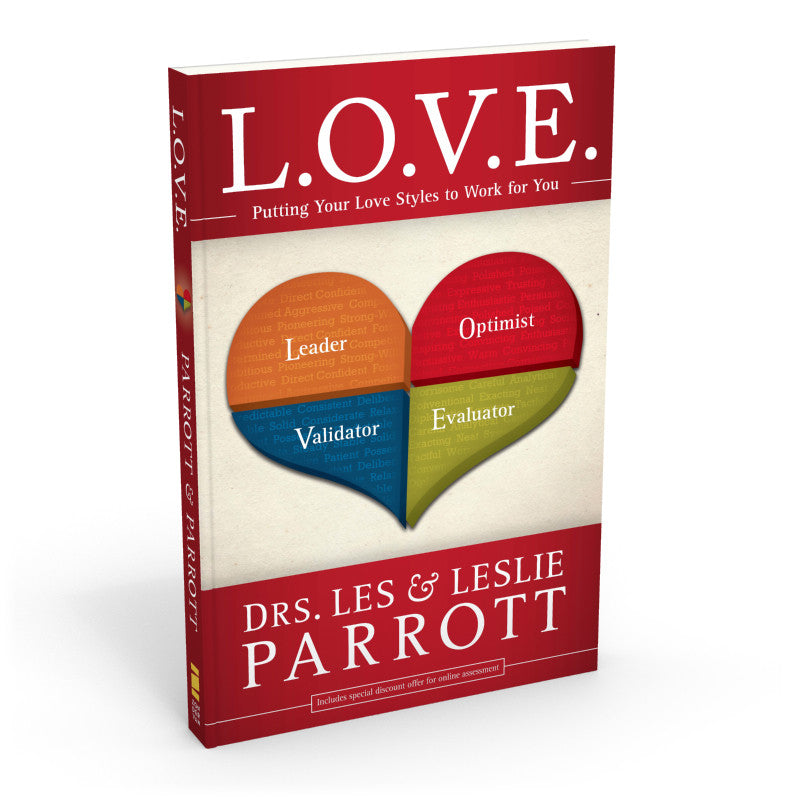
In this groundbreaking book, the letters L, O, V, and E represent four personality dimensions that make up your personal “love style.” Once you know your own love style and that of your spouse, you will be able to love him or her in a way that will help you get the love you need in return. Never before has there been such an easy-to-use and scientifically proven tool for pinpointing each person’s approach to love. You’ll discover how much these dimensions inform your love style.
Constantly! My husband says & does things that the average 50yr old man wouldn’t do and I often find myself saying I don’t understand, explain what you mean. We’ve had many bumpy days & weeks early on in our relationship and still do occasionally because I forget he’s not a typical 50yr old man. As for striking someone publicly/privately there’s no excuse I consider it a shameful act that solves nothing. I grew up with an angry mother whose anger was only matched by her command of swear words & a passive father and as a teenager witnessed my mother repeatedly punch my father on his back (an episode I’ll never forget.) Clearly he could have pummeled her but he took it & walked away. I fight this in myself because I don’t want to be like her in that respect.
Every single time she speaks
I just watched War Room last night. Life is 10% what happens to you and 90% what you tell yourself about the other 10%.